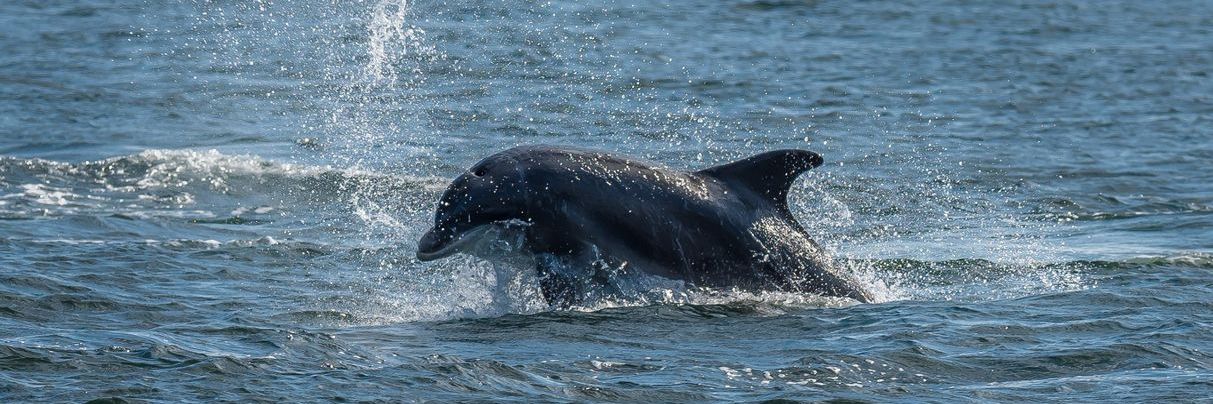
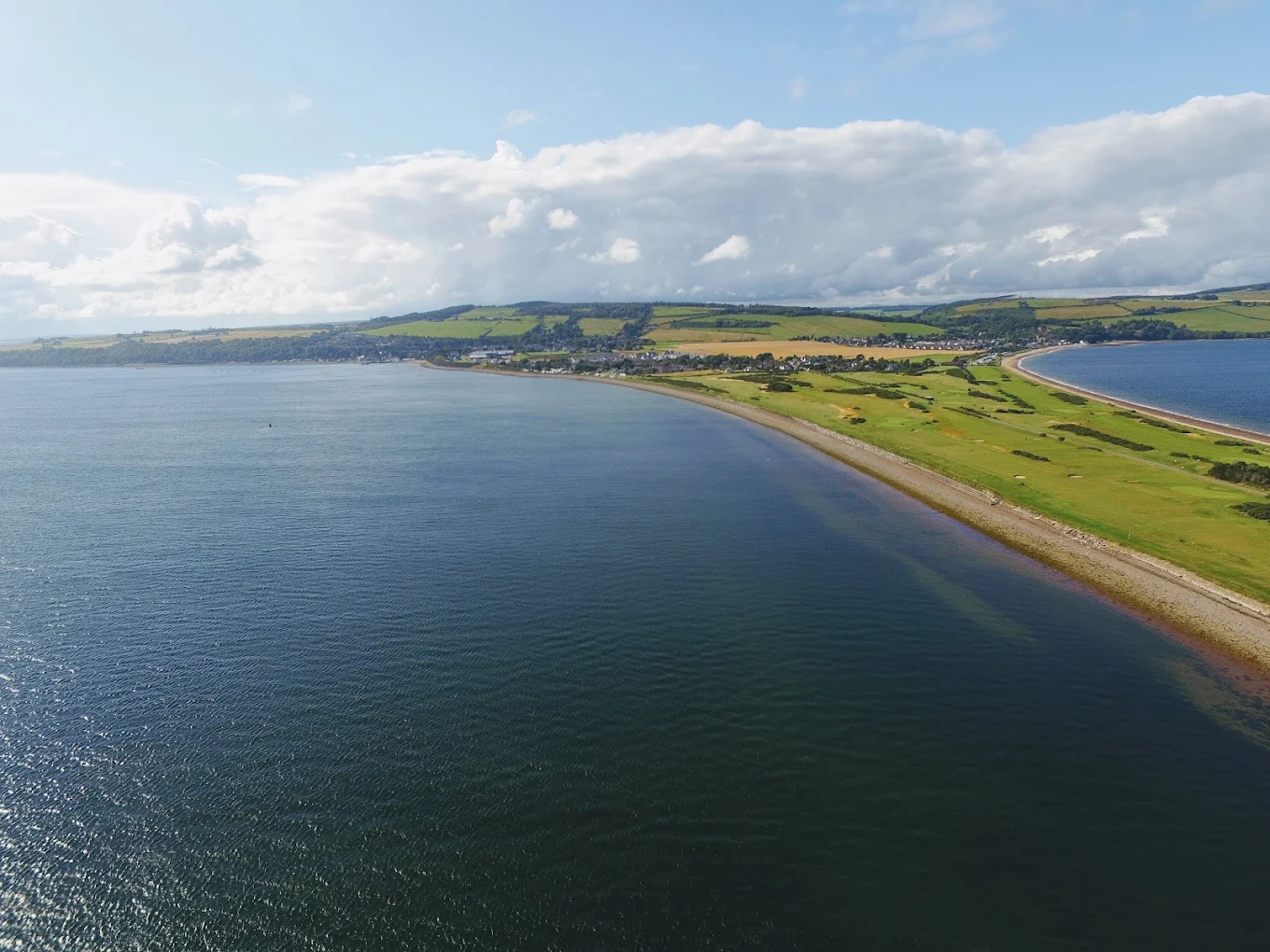
Chanonry Point is a narrow spit of land near Inverness that pushes out into the Moray Firth, funnelling fish into a tight channel that draws dolphins in close to feed.
This article covers everything you need to plan a dolphin watching trip. We’ll share the best time to see dolphins at Chanonry Point, practical watching tips, how to get there, and where to park.
What is Chanonry Point?
Chanonry Point Scotland sits at the tip of Chanonry Ness, a spit of land reaching into the Moray Firth between the villages of Fortrose and Rosemarkie on the Black Isle.
It is widely rated as one of the best spots in the whole of the UK to watch bottlenose dolphins from dry land. The crossing here to Fort George on the opposite shore is the narrowest stretch of the firth east of Inverness, which is exactly why the dolphins come so close.
- Location: Between Fortrose and Rosemarkie, Black Isle, near Inverness
- Famous for: Shore-based bottlenose dolphin watching
- Moray Firth dolphin population: Around 200 individuals, the world’s most northerly resident pod
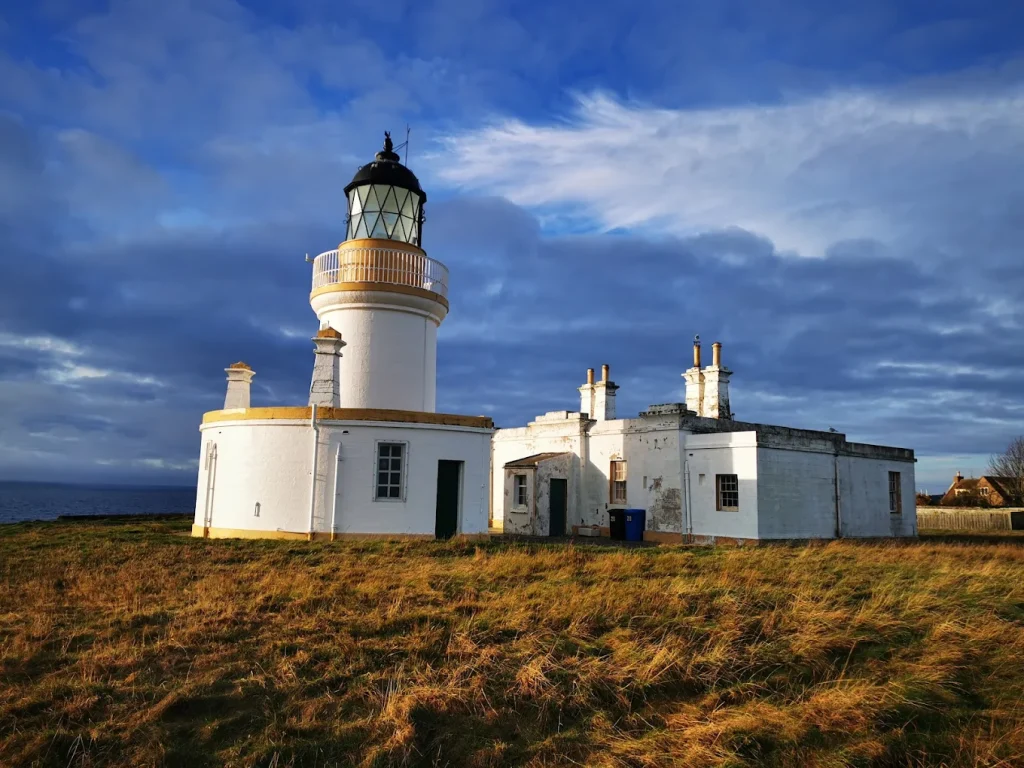
- Lighthouse: First lit 1846, designed by Alan Stevenson
- Cost to watch: Free (parking charges apply)
Best time to see dolphins at Chanonry Point
Timing is everything here, and it comes down to the tide. The best time to see dolphins at Chanonry Point is on a rising tide, usually from around one hour after low tide. When the tide turns, the incoming current pushes salmon and other fish into the narrow channel off the point, and the dolphins follow them in to feed.
The best time to see dolphins Chanonry Point on any given day
- Check the tide times for Rosemarkie or Fortrose before you set off
- Aim to arrive shortly before low tide
- Stay for the first couple of hours of the rising tide
- Pick days with a midday low tide and a big difference between low and high water (spring tides, not neap tides)
Season matters too. Bottlenose dolphins are present in the Moray Firth all year round, but sightings increase in summer. The peak runs from late May through to September, coinciding with the salmon returning to the rivers Ness and Beauly.
Tips for dolphin watching in Scotland
- Work your visit around the rising tide, not just a convenient hour
- Bring binoculars to scan the channel for distant dorsal fins
- Dress warmly and windproof, as the point is exposed even in summer
- Pack a flask and a picnic, since you may wait a while
- For serious photos, bring a fast 200 mm to 300 mm lens
- Watch your footing on the steep shingle beach, especially with the tide coming in
- Check local cetacean sighting groups on Facebook for recent reports
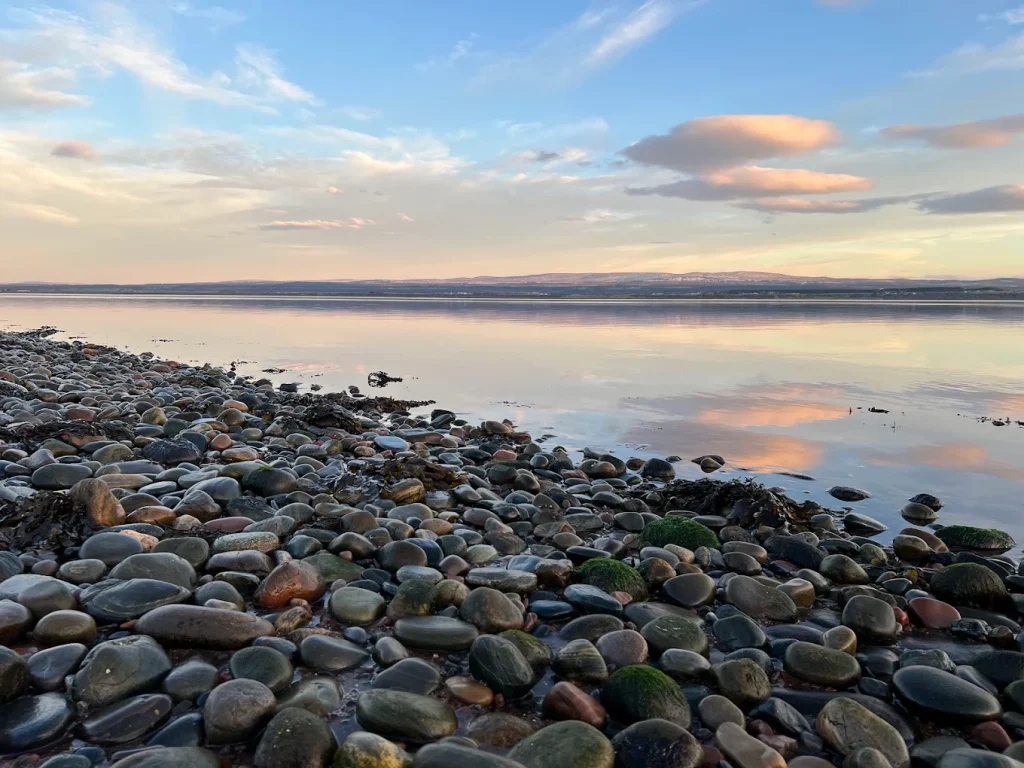
Location and how to get to Chanonry Point
Inverness is the natural base for a trip to Chanonry Point, sitting at the start of the famous North Coast 500 and within easy reach of the Black Isle.
Mapping your day in advance helps, and a good regional touring map that marks distances and driving conditions makes the Highland roads far less daunting.
- By car: From Inverness, take the A9 over the Kessock Bridge, follow signs for the Black Isle and Fortrose, then for Chanonry Point and the golf club. The final stretch crosses the golf course, so watch for stray golf balls.
- By bus: Stagecoach Highlands routes 26A and 26C run from Inverness Bus Station to Fortrose in roughly 36 minutes. Get off near the Church of Scotland and walk down.
- On foot from Fortrose: The walk from the village to the point is around a kilometre and genuinely pleasant. This is the recommended approach in summer.
- By boat: Operators such as Dolphin Spirit sail from Inverness towards the point for a different perspective.
Other wildlife and attractions near Chanonry Point
Even on a slow dolphin day, the point rarely disappoints. The waters here support plenty of other wildlife:
- Harbour porpoises: Present all year round, smaller and shyer than the dolphins
- Grey seals: Regularly hauled out or bobbing in the channel
- Minke whales: Occasionally seen in the wider firth between March and October
- European otters: Occasional, lucky sightings along the shore
- Seabirds: A constant presence over the firth
The point also has a darker tale to share…a memorial stone marks the spot where Coinneach Odhar, the Brahan Seer, is said to have been executed. With Inverness so close, you can easily pair a dolphin trip with other Highland days out.
The legends and Operation Deepscan history of Loch Ness and its monster are a short drive away, while in town, the free tropical glasshouse and cactus collection at the botanic gardens and the Highland exhibitions at the city museum and art gallery make good wet-weather options.
After dark, the Highlands are also one of the best places in Britain to see the aurora when geomagnetic activity is high.
Facilities and parking at the site
Facilities at Chanonry Point Scotland are limited, and parking is the single biggest frustration people report.
| Pros | Cons |
|---|---|
| Free to watch the dolphins | The small car park fills very quickly |
| Level path and wheelchair-accessible viewing area | Parking charges apply (April to October), 3-hour max |
| Picnic benches on the level ground | No public toilets at the point itself |
| Short, pleasant walk from Fortrose | Exposed and often windy |
Book your trip to see the dolphins today
Few wildlife experiences in Britain match standing on the shingle at Chanonry Point as a four-metre dolphin surfaces a few feet away.
Just remember to get the tide right, dress for the wind, and bring patience! Even without the dolphins, the views across the Moray Firth to Fort George make the trip worthwhile.
The easiest way to plan your visit around the tides is to stay nearby, so you can head out early or late when conditions are best.
mySTAYINN offers comfortable, well-located accommodation across Inverness and the Highlands, giving you the perfect base for dolphin watching at Chanonry Point Scotland, and everything else the region has to offer.
Browse our Inverness apartments and book your Highland getaway today.